Introduction
For decades, protein design has been limited by the sheer computational complexity of nature’s building blocks. A single protein can fold into an astronomical number of configurations, making the search for a functional structure akin to finding a needle in a haystack the size of the galaxy. Traditional high-performance computing (HPC) often hits a wall when simulating these complex folding landscapes. Enter quantum computing—a paradigm shift that promises to turn these “intractable” problems into solvable engineering tasks.
Quantum-enhanced protein design is no longer science fiction. It is an emerging field that leverages quantum bits (qubits) to perform multidimensional calculations that binary computers simply cannot handle. By harnessing superposition and entanglement, researchers can model molecular interactions with unprecedented accuracy, paving the way for custom-designed enzymes, hyper-effective vaccines, and targeted therapeutic agents. Understanding how to integrate these workflows into biotech R&D is now a competitive necessity for forward-thinking organizations.
Key Concepts
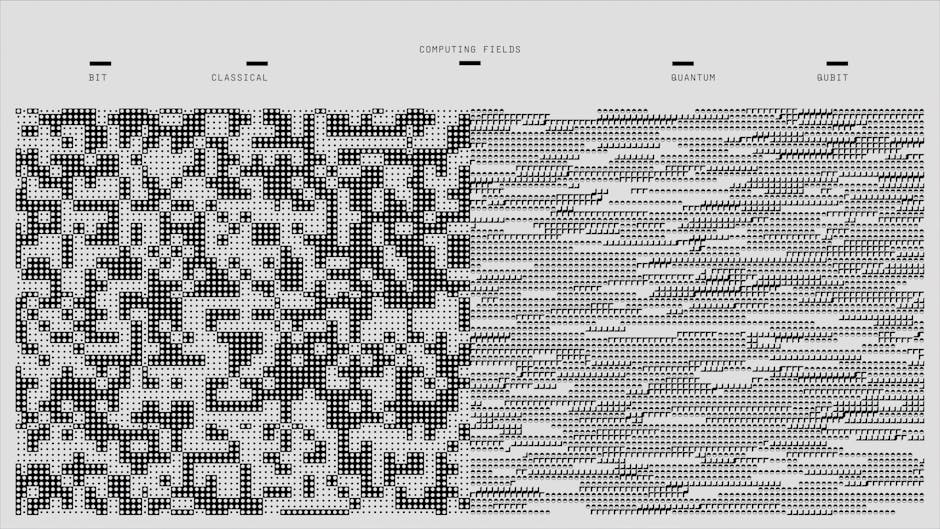
To understand quantum-enhanced protein design, we must first recognize the limitation of classical digital bits. A classical computer processes information in binary (0s and 1s). A quantum computer utilizes qubits, which exist in states of superposition, allowing them to represent multiple possibilities simultaneously.
The Folding Problem: Proteins fold based on the lowest energy state, known as the “native state.” Predicting this state requires calculating the total energy of all possible configurations, a process that grows exponentially complex as the protein sequence increases in length. Quantum algorithms, such as the Variational Quantum Eigensolver (VQE) or the Quantum Approximate Optimization Algorithm (QAOA), are specifically designed to find these global energy minima far more efficiently than classical brute-force methods.
Quantum Simulation: Unlike traditional simulations that approximate quantum mechanical behavior, quantum computers operate on the same physical principles as the molecules they study. This allows for a “natural” representation of chemical bonds and electronic structures, providing high-fidelity data that classical simulations often obscure through approximations.
Step-by-Step Guide: Implementing a Quantum-Ready Workflow
Transitioning to quantum-enhanced protein design requires a phased approach. You do not need to replace your current lab infrastructure; instead, you must augment it with quantum-ready computational pipelines.
- Define the Molecular Objective: Identify a protein target where current classical models fail—such as highly flexible intrinsically disordered proteins (IDPs) or complex membrane proteins.
- Data Pre-processing: Use classical machine learning tools (like AlphaFold2 or Rosetta) to prune the search space. Quantum computers are currently most effective when working on specific “sub-problems” within a larger design challenge.
- Select the Quantum Algorithm: Choose between gate-based quantum circuits for high-precision electronic structure calculations or quantum annealing for combinatorial optimization of amino acid sequences.
- Hybrid Cloud Integration: Utilize cloud-based quantum services (such as IBM Quantum, AWS Braket, or IonQ) to run your quantum kernels. This allows you to offload the quantum-intensive tasks while keeping your primary data management on traditional secure servers.
- Validation and Iteration: Feed the quantum-calculated structural candidates back into your high-throughput screening platforms. Use the experimental feedback loop to refine the quantum model parameters, improving future predictions.
Examples and Case Studies
The practical application of quantum computing in biotechnology is currently centered on “Quantum-Classical Hybrid” approaches. One prominent example is the development of targeted protein therapeutics. In cancer research, researchers have used small-scale quantum simulations to better understand the binding affinity between experimental drug candidates and specific protein receptors on tumor cells.
“Quantum computing allows us to see the ‘electronic handshake’ between a ligand and a protein in ways that were previously hidden behind the veil of classical approximation.” — Insights from recent industry R&D papers.
Another real-world application involves enzyme optimization for synthetic biology. Companies are looking to redesign enzymes to break down plastics or sequester carbon more efficiently. By using quantum algorithms to optimize the active site of these enzymes, researchers have identified amino acid substitutions that increase catalytic efficiency by orders of magnitude, a feat that would have taken years of trial-and-error in a wet lab.
Common Mistakes
- Overestimating Hardware Capacity: Many teams try to run entire protein folding simulations on current “Noisy Intermediate-Scale Quantum” (NISQ) devices. Current hardware is best used for specific sub-tasks, not full-length protein simulation.
- Ignoring the “Data-to-Quantum” Bottleneck: Simply having a quantum computer is not enough. If your team does not have the expertise to convert biological data into quantum-compatible mathematical representations (Hamiltonians), your investment will yield little return.
- Neglecting Hybrid Infrastructure: Trying to go “all-in” on quantum without a classical backbone leads to failure. A successful strategy treats the quantum processor as a specialized co-processor for your classical HPC environment.
Advanced Tips
To truly gain an edge, focus on the Quantum-Machine Learning (QML) intersection. Instead of using quantum computers solely for simulation, use them to train more powerful generative models. Quantum-enhanced neural networks have shown the ability to identify patterns in protein sequence space that are invisible to standard deep learning architectures.
Furthermore, keep an eye on Error Mitigation Techniques. Because current quantum hardware is prone to noise, implementing advanced error-correction protocols is the difference between meaningful structural data and random computational output. Partnering with quantum-native biotech startups can provide the specialized algorithms required to navigate these hurdles without building a quantum physics department from scratch.
Conclusion
Quantum-enhanced protein design represents the next evolution in the biotechnology lifecycle. While we are still in the early stages of the “quantum advantage” era, the ability to model molecular interactions at their fundamental level will eventually render many current trial-and-error methods obsolete.
For leaders in biotech, the goal is not to wait for perfect hardware. It is to begin building the talent, data pipelines, and hybrid workflows today that will capitalize on this technology as it matures. By integrating quantum computing into your R&D strategy, you are positioning your organization to solve the most complex biological puzzles of the 21st century.
For more insights on optimizing your R&D pipelines, check out our resources on Biotech Innovation Strategies and explore the evolution of computational biology.
Further Reading
- NIST Quantum Information Science Program – Overview of standards and research in quantum computing.
- Nature: The Future of Quantum Biology – Peer-reviewed insights on quantum effects in biological systems.
- U.S. Department of Energy – Quantum Computing Research – Government-backed research initiatives into high-impact quantum applications.
Leave a Reply