{
“title”: “Renewable Energy: A Strategic History of Power and Infrastructure”,
“meta_description”: “Examine the historical trajectory of renewable energy from ancient mechanisms to modern grids and what it reveals about long-term infrastructure and strategy.”,
“tags”: [“renewable energy history”, “infrastructure strategy”, “energy transition”, “technological evolution”, “industrial systems”],
“categories”: [“History”, “Technology”],
“body”: “
The Primitive Foundations of Kinetic Leverage
Energy transition is not a modern phenomenon; it is a structural necessity that has defined civilization since antiquity. Before the coal-heavy reliance of the Industrial Revolution, humanity operated almost exclusively on renewable flows. Waterwheels and windmills were the primary engines of mechanical output, serving as early examples of systems designed to convert ambient environmental energy into concentrated work. These mechanisms were not merely incidental; they were essential components of operational stability for grain milling, irrigation, and early manufacturing.
The shift to fossil fuels during the 19th century was not a failure of renewable technology, but a triumph of density and transportability. Leaders and industrial architects chose coal because it decoupled production from geographical constraints—you could place a steam engine anywhere, whereas a waterwheel required a river. Understanding this transition is vital for modern decision-making: we abandoned renewables not because they stopped working, but because the alternative offered superior short-term logistics.
The Re-Emergence of Distributed Generation
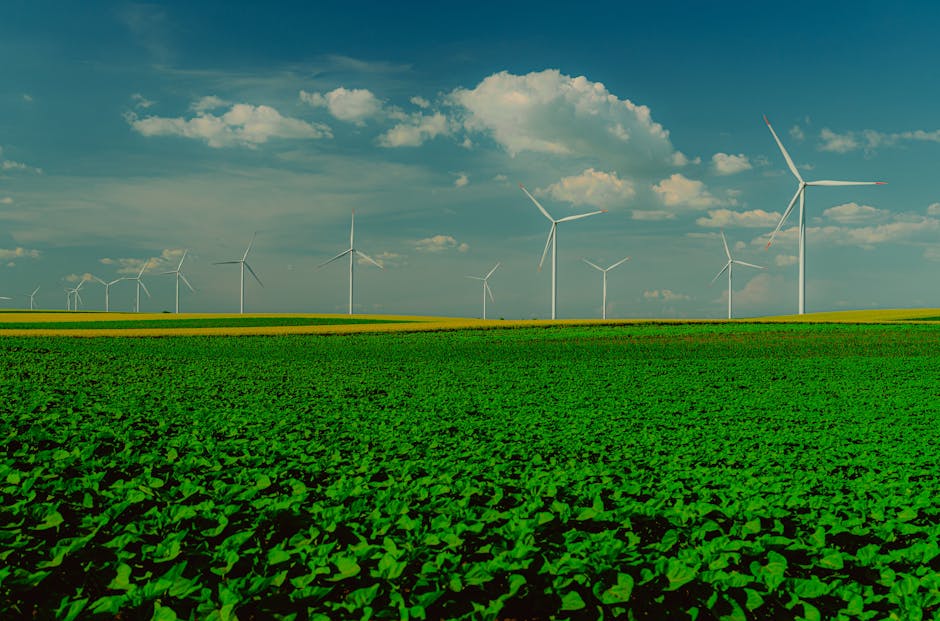
The 20th-century obsession with centralized, high-output thermal power plants created a fragile, unidirectional grid. By the late 1900s, the emergence of modern solar and wind technologies began to challenge this top-down model. Unlike coal or nuclear plants, renewable assets exhibit characteristics of distributed systems. This transition represents a fundamental shift in operations, where resilience is gained through decentralization rather than scale.
High-performers in the energy sector now recognize that efficiency is no longer strictly about output volume; it is about the reliability of the architecture. Just as robust productivity hinges on the quality of your workflow, grid stability now depends on the seamless integration of intermittent sources. Those who fail to adapt their infrastructure to this reality risk obsolescence, much like the steam engine manufacturers who ignored the rise of internal combustion.
Strategic Implications for Modern Leaders
Applying the lessons of energy history to current organizational structures requires viewing infrastructure as a long-term asset. When we analyze historical trends, it becomes clear that resource transitions occur when the cost-to-utility ratio flips. In the modern context, we are seeing this play out in the integration of AI to manage the complex load-balancing requirements of a decentralized grid. Advanced analytics replace the human operator in predicting demand fluctuations, turning a volatile system into a predictable one.
For the leader, the lesson is clear: do not cling to legacy infrastructure simply because it has historically worked. Evaluate the fundamental shifts in your environment. If the cost of transition is falling while the systemic benefits of a new approach increase, the optimal strategy is early adoption. Integrating renewable systems at scale is a case study in how technical hurdles are secondary to the strategic will to reorganize resources.
For more on high-level operational management, visit The BossMind platform for deeper analytical frameworks.
Further Reading
”
}