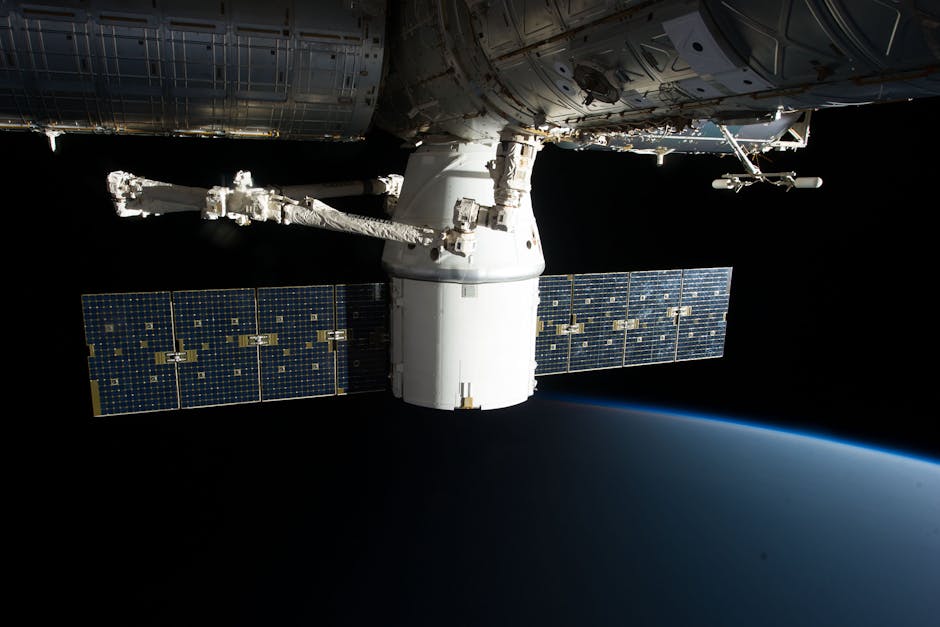
The High-Stakes Frontier of Orbital R&D
Modern industry often views space as a theater of prestige or a domain for telecommunications. This is a tactical error. The true value of space exploration lies in its function as a unique, non-terrestrial laboratory where the fundamental constraints of physics—gravity, fluid dynamics, and atmospheric composition—are altered. For the high-performance leader, space represents an untapped edge in product development and scientific discovery that will dictate the next decade of competitive positioning.
When we remove the gravity constant from manufacturing, we unlock material science breakthroughs that are physically impossible to replicate on Earth. Leaders who understand strategic innovation recognize that these aren’t just scientific curiosities; they are the foundation for the next generation of semiconductors, pharmaceuticals, and high-tensile alloys.
Gravity-Independent Material Science
Terrestrial manufacturing struggles with sedimentation and convection currents. In microgravity, these limitations vanish. Metals that cannot be mixed on Earth due to density differences become perfectly homogenous alloys in space. This is not merely an academic pursuit; it is a manufacturing capability that promises to render current industrial processes obsolete.
Consider the production of ZBLAN fiber optics. In terrestrial environments, crystallization during cooling limits the purity of these glass fibers. In space, the absence of buoyancy-driven convection allows for the production of ultra-pure fibers with signal-carrying capacities orders of magnitude beyond current standards. This demonstrates a core principle of operational excellence: if the environment imposes a hard limit on your output, change the environment.
Data Infrastructure and Predictive Modeling
Space-based assets are no longer just relay points for data; they are autonomous processors. The integration of high-bandwidth satellite arrays with decentralized AI systems enables real-time Earth observation that informs critical decision-making for logistics, agricultural supply chains, and climate risk. For organizations, this means moving from reactive reporting to predictive modeling.
Leaders who master the use of orbital data streams gain a massive information asymmetry. By utilizing precise, long-term environmental datasets, you can refine your decision-making frameworks to account for variables that your competitors cannot see. The ability to synthesize multi-spectral imagery into actionable intelligence is the new standard for resource management.
Scaling the Space-Based Value Chain
Building a presence in the orbital economy requires an aggressive commitment to infrastructure. We are moving toward a modular manufacturing ecosystem where R&D occurs in specialized orbital platforms, allowing companies to iterate on high-value products before scaling them on Earth. This requires a shift in how we approach productivity—treating the vacuum of space as a resource-rich environment rather than a hostile void.
As outlined in the principles found at thebossmind.com, the capacity to allocate capital toward long-term R&D in emerging domains is what separates industry leaders from those merely maintaining the status quo. Those who capitalize on these scientific opportunities now will set the standards for the orbital economy by the time the broader market acknowledges the shift.
The most significant advances in the next century will come from those who treat physics as a variable to be engineered, rather than a barrier to be respected.
Operational Takeaways
- Identify Bottlenecks: Audit your product lines to determine if current physical limitations are tied to gravity or atmospheric pressure.
- Monitor Orbital R&D: Track developments in crystal growth and pharmacological protein crystallization currently happening on the ISS and private orbital labs.
- Integrate Remote Sensing: Evaluate how your organization can benefit from high-resolution, low-latency Earth observation data to optimize your operational footprint.