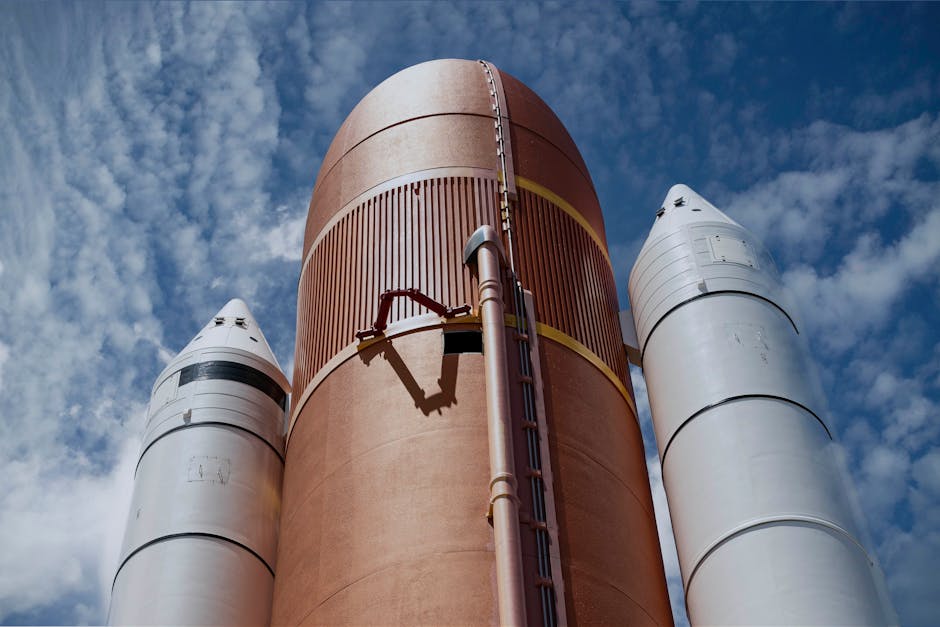
The Asymmetry of Frontier Expansion
Most corporate strategies operate on a horizon of three to five years. By contrast, space exploration requires decadal thinking where the cost of failure is the total loss of capital and human life. This environment serves as the ultimate laboratory for strategic planning under conditions of extreme uncertainty. When the feedback loops are measured in light-minutes rather than milliseconds, the ability to design autonomous systems becomes a prerequisite for survival.
The expansion into space is not a quest for discovery; it is a shift in infrastructure. Companies that view space as a novelty fail to understand the shift from terrestrial resource limitation to the infinite possibilities of the solar system. Leaders must recognize that early space-based operations are currently in the ‘high-cost, low-yield’ phase, a stage every revolutionary technology must endure before reaching mass-market scalability.
Operational Excellence in Vacuum Environments
In high-performance organizations, efficiency is defined by the reduction of friction. In space, friction is literally the adversary. The physics of rocketry demand absolute precision, where a deviation of one percent in fuel mixture results in a total mission failure. This discipline provides a rigorous model for operational excellence. You cannot ‘fix it in production’ when the production environment is in low Earth orbit.
High-performers who study the aerospace sector learn that complexity management is not about adding features, but about removing potential points of failure. The use of redundant, fault-tolerant systems in satellite constellations mirrors the need for robust, decentralized systems within a modern enterprise. When your architecture is exposed to harsh, unyielding conditions, the only path to consistency is through modularity and extreme standardization.
Decision-Making Under Terminal Constraints
Space forces a departure from the comfort of iterative testing. Because real-world simulation is impossible for deep-space hardware, we rely on digital twins and AI to predict system behavior. This shift is essential for leaders who need to make high-stakes decisions without perfect information. Developing the capacity to simulate outcomes across thousands of variables is no longer a luxury; it is the core of modern competitive strategy.
As we move toward a multi-planetary economy, the principles of decision-making will evolve from simple cost-benefit analysis toward planetary-scale resource management. For those interested in the broader implications of these shifts, the discourse at The BossMind Network continues to map the trajectory of these advancements in human capital and global infrastructure.
The Logistics of New Markets
Establishing a presence in space is fundamentally a logistics challenge. Whether delivering data or raw materials, the cost per kilogram to orbit defines the ceiling of what is economically feasible. As costs drop through the introduction of reusable launch vehicles, the barrier to entry for space-based manufacturing disappears. This represents the next frontier of entrepreneurship, where the focus shifts from terrestrial markets to the exploitation of near-Earth asteroids and lunar resources.
For the operator, the lesson is clear: watch the capital expenditure per unit of progress. When that metric shifts, it signals the collapse of the old order and the beginning of a new industrial paradigm. Those who prepare their organizations to function in a low-latency, high-reliability environment will define the next century of growth.