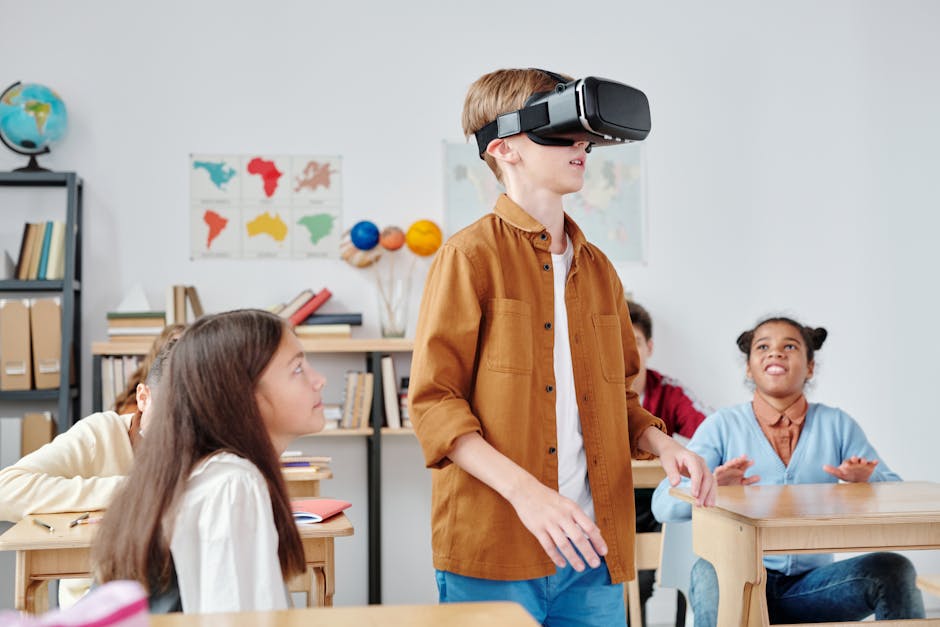
The Illusion of Immersive Progress
Educational institutions frequently fall into the trap of equating digital adoption with pedagogical efficacy. Virtual Reality (VR) represents the latest iteration of this bias. While the promise of simulated environments suggests a scalable path toward experiential learning, the reality of implementation remains hindered by systemic friction. Leaders often miscalculate the delta between deploying hardware and achieving actual knowledge retention or performance improvement.
The Infrastructure Deficit
Deploying VR at scale creates a unique set of technical debt. Unlike standard software updates, VR hardware demands a robust physical and digital infrastructure. Institutions must account for latency-sensitive networking, frequent maintenance of high-touch hardware, and the complex integration with existing Learning Management Systems (LMS). Without a clear systems architecture in place, these tools become expensive shelf-ware that drains operational budgets rather than enhancing student outcomes.
Content Continuity and Standardization
A primary bottleneck is the lack of standardized, high-fidelity content. Most educational VR applications are monolithic, vendor-locked products that lack the agility required for modern curricula. Leaders must evaluate their strategy against the reality of content obsolescence. When curriculum updates occur annually but development cycles for immersive environments take years, the technology fails the very users it intends to assist.
Cognitive Load and Operational Constraints
Beyond the technical layers, the human element presents a significant operational risk. Virtual reality induces cognitive load constraints that are not present in traditional digital learning. Extended exposure in a classroom setting often leads to hardware fatigue and simulation sickness, disrupting the continuity of instruction. Organizations must approach the deployment of these tools through the lens of performance psychology, ensuring that the technology facilitates focus rather than fracturing it.
Decision-Making Under Uncertainty
High-performers understand that technology adoption is a decision-making exercise, not a trend-following mandate. The decision to integrate VR requires rigorous auditing of current pedagogical gaps. If the fundamental problem is poor curriculum design or ineffective instruction, VR acts only as a high-tech veneer that accelerates the underlying failure. Leaders must define success metrics—such as time-to-competency or error reduction—before authorizing capital expenditure on immersive hardware.
The Future of Immersive Infrastructure
For VR to graduate from a peripheral novelty to a core institutional asset, the focus must shift from the device to the data. Organizations that can integrate AI to provide real-time, adaptive feedback within virtual environments will differentiate themselves from those simply buying headsets. The goal is to build an ecosystem where the virtual experience serves as a sandbox for execution, allowing students to iterate on real-world challenges in a risk-free environment.
As you scale these initiatives, remember that The BossMind provides the structural frameworks necessary for managing high-growth technology stacks in complex organizations. Relying on superficial metrics only masks systemic operational flaws.
Leave a Reply